President Bola Tinubu has approved major changes in the leadership of Nigeria’s Armed Forces, in a move aimed at strengthening the nation’s security a
President Bola Tinubu has approved major changes in the leadership of Nigeria’s Armed Forces, in a move aimed at strengthening the nation’s security architecture.
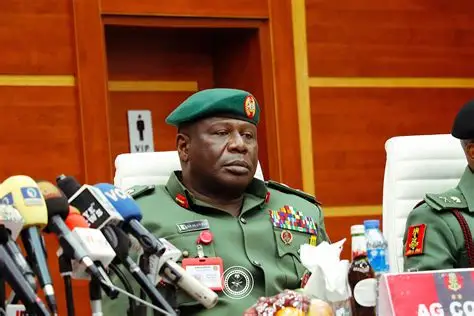
Major-General W. Shaibu becomes Chief of Army Staff, Air Vice Marshal S.K. Aneke takes over as Chief of Air Staff, while Rear Admiral I. Abbas assumes office as Chief of Naval Staff.
The Chief of Defence Intelligence, Major-General E.A.P. Undiendeye, retains his position.
The President commended the outgoing Service Chiefs for their patriotic service and dedicated leadership, while urging the new appointees to justify the confidence reposed in them and to uphold the professionalism, vigilance, and unity that define the Armed Forces of Nigeria.
All appointments take immediate effect.
The changes come weeks after 16 senior soldiers were arrested for allegedly planning a coup to overthrow the federal government.
Recall that last week, at least 16 senior military officers were in custody following allegations of a coup plot to topple President Bola Ahmed Tinubu’s administration.
The officers, ranging from the rank of Captain to Brigadier General were picked up from various locations across the country in a coordinated operation by the Defence Intelligence Agency (DIA) and other security bodies.
While the Defence Headquarters initially described the arrests as part of a routine military exercise involving issues of indiscipline and breach of service regulations, sources within the military said the official explanation was a smokescreen to avoid panic.
“The 16 officers were planning a coup. The military authorities were just being diplomatic in the statement released by the spokesperson,” a senior DIA official was quoted as saying. “They had begun holding secret meetings to overthrow the President and announce a military government.”
In its earlier release, the Director of Defence Information, Brigadier General Tukur Gusau, said the officers’ detention followed internal investigations into misconduct and disobedience.
“Investigations have revealed that their grievances stemmed largely from perceived career stagnation caused by repeated failure in promotion examinations, among other issues,” Gusau stated.
“Some of the apprehended officers had been under jurisdiction for various offences, either awaiting or undergoing trial. Their conduct was deemed incompatible with the standards of military service.”
However, insiders insisted that the arrests were linked to an attempted coup that was foiled after intelligence agencies intercepted communications and meeting plans
A top source disclosed that the conspirators planned to execute the coup during the October 1 Independence Day parade, targeting President Tinubu and other senior officials in attendance.
“Yes, they were arrested for planning to stage a coup and take over government,” the source confirmed.
“That was why the Independence Day parade marking the country’s 65th anniversary was abruptly cancelled. Intelligence indicated they intended to strike during the event.”
The source further revealed that the National Security Adviser and service chiefs advised the presidency to suspend the parade after credible intelligence showed that the conspirators had positioned armed men for the assault.
Nigeria has a long and turbulent history with military coups. Since independence in 1960, the country has witnessed five successful coups and several abortive ones, each leaving deep scars on its democratic evolution.
The recent development has reignited public anxiety over growing discontent within the military ranks amid worsening economic hardship and security challenges across the country.
