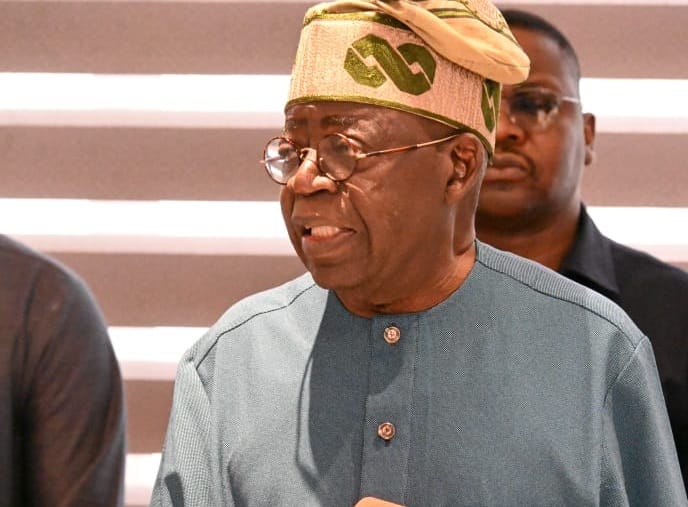
A request made by President Bola Ahmed Tinubu to the National Assembly on Tuesday, March 31, seeking over $6 billion foreign has pushed Nigeria’s debt
A request made by President Bola Ahmed Tinubu to the National Assembly on Tuesday, March 31, seeking over $6 billion foreign has pushed Nigeria’s debt stock to over $110 billion which is about N195 trillion.
This is just as the International Monetary Fund (IMF) expressed concerns over high debt vulnerabilities among low income countries.
Nigeria’s Senate has now swiftly approved the request to secure up to $6 billion in new external borrowing, a move that underscores the government’s growing reliance on foreign financing even as concerns mount over the country’s rising debt burden.
The approval, granted on Tuesday during plenary, followed the presentation of a report by Senator Aliyu Wamakko, chairman of the Senate Committee on Local and Foreign Debts. Lawmakers endorsed the request with little delay, clearing the way for a major injection of foreign capital into Africa’s largest economy.
Tinubu had formally sought the Senate’s backing through two separate letters addressed to Senate President Godswill Akpabio. Central to the request is a proposed $5 billion structured total return swap (TRS) financing arrangement with First Abu Dhabi Bank in the United Arab Emirates.
According to the president, the facility will be disbursed in tranches and is intended to support budget implementation, fund priority infrastructure projects, and refinance existing high-cost debts. Tinubu argued that the phased structure would help ease immediate pressure on Nigeria’s debt servicing obligations while providing liquidity for urgent fiscal needs.
“The purpose of this letter is to request the approval… to establish a structured total return swap (TRS) derivative external financing programme… of up to $5 billion,” Tinubu wrote, citing provisions of the Debt Management Office Act.
The senate also approved a separate $1 billion loan facility backed by UK Export Finance and arranged through Citibank’s London branch. The funds are earmarked for the rehabilitation of key maritime infrastructure, including the Lagos Port Complex and Tin Can Island Port—projects seen as critical to easing trade bottlenecks and boosting economic activity.
But the borrowing push comes at a precarious moment for Nigeria’s public finances.
Tinubu disclosed that the country’s total public debt stood at $110.3 billion (approximately ₦159.2 trillion) as of December 31, 2025—a sharp increase driven by continued borrowing and the steep depreciation of the naira.
Recent fiscal data paints a stark picture: between January and July 2025, Nigeria spent roughly ₦9.8 trillion servicing debt out of ₦13.7 trillion in total revenue, leaving limited room for capital investment. In 2024, debt servicing consumed about 60 percent of government revenue, surpassing spending on infrastructure and development.
While the administration maintains that new loans will fund critical projects—including rail lines and major road networks—critics argue that the tangible impact has been limited. Concerns persist that a significant portion of borrowed funds is being diverted toward recurrent expenditures such as salaries and overheads, rather than revenue-generating investments.
Currency volatility has further compounded the problem. The naira’s depreciation has effectively doubled the local currency cost of servicing external debt, eroding the value of borrowed funds and intensifying fiscal strain.
Security challenges and governance concerns have also slowed project implementation in several regions, raising questions about the efficiency and transparency of public spending.
Looking ahead, analysts warn that Nigeria’s debt servicing obligations could exceed ₦15 trillion in 2026, potentially consuming more than half of projected government revenue. Such a scenario would further constrain the country’s ability to invest in critical sectors like healthcare, education, and power.
For now, the Senate’s approval gives the Tinubu administration the green light to proceed with its borrowing strategy. Whether the new inflows will translate into tangible economic gains—or deepen Nigeria’s debt vulnerability—remains a question that will define the country’s fiscal trajectory in the coming years.
