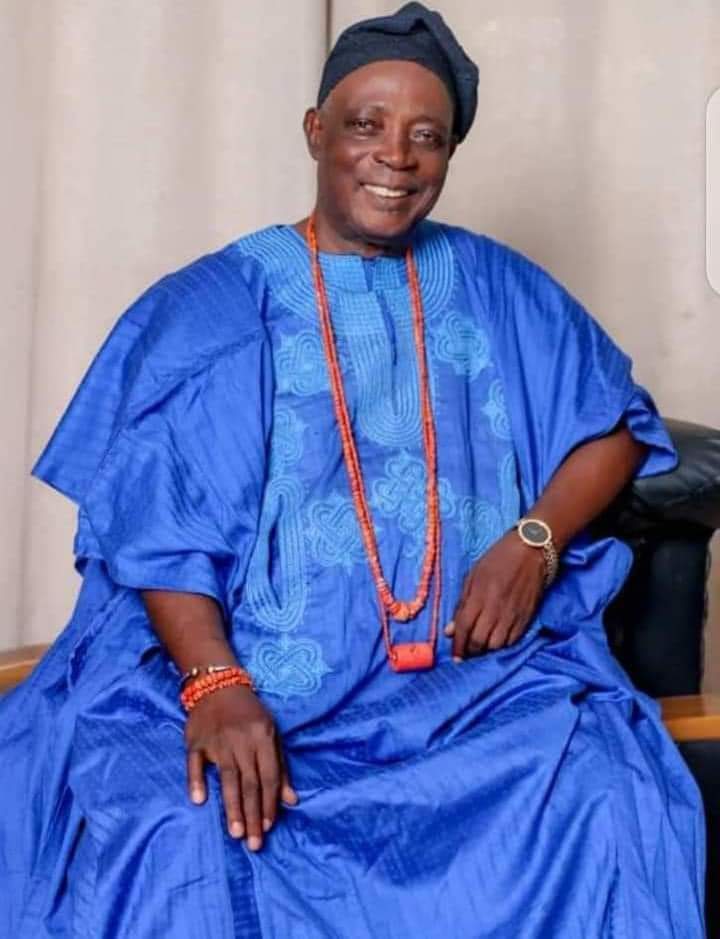
Almost a year ago, specifically July 12, 2024, the late Olubadan of Ibadanland, Oba Owolabi Olakulehin, ascended to one of the highest traditional tit
Almost a year ago, specifically July 12, 2024, the late Olubadan of Ibadanland, Oba Owolabi Olakulehin, ascended to one of the highest traditional titles in Yoruba land in a grand ceremony that took place at the historic Mapo Hall.
To ascend the throne of Olubadan, you have to be a member of the two high-ranking principal chieftaincy lines consisting of the Balogun and Otun.
The Olubadan throne is unique in its structured and predictable succession system, which ensures a seamless transfer of power. Unlike many traditional rulerships in Nigeria, the Olubadan succession follows a well-defined ladder within the two ruling lines.
Chiefs ascend through ranks in these lines until they reach the position of Otun Olubadan or Balogun of Ibadanland, making them eligible to become the Olubadan.
This system, rooted in Ibadan’s history, minimizes disputes and ensures that the most senior chief ascends the throne.
The Balogun (warrior) line consists of the Ekarun Balogun who’s the sixth in command, Ekerin Balogun who is the fifth in command, Ashipa Balogun who’s the fourth in command, Osi Balogun who is the third in command, Otun Balogun who is next in rank to Balogun and the Balogun himself who is the highest member of the line.
While the Otun (civil) line consists of Ekarun Olubadan, Ekerin Olubadan, Ashipa Olubadan, Osi Olubadan, and the Otun Olubadan as the highest-ranking member in the line.
The late Olakulehin was from the Balogun line and he waited 38 years to ascend the throne after becoming Jagun Balogun.
The next Olubadan will now switch to the Otun line where former Oyo State governor, Rasheed Ladoja, is the highest-ranking member.
The Street Journal unravels who Ladoja is beyond being an ex governor of Oyo State.
Born September 24, 1944 in Gambari area of Ibadan, Ladoja attended Ibadan Boys High School between 1958–1963 and Olivet Baptist High School between 1964 and 1965. He further studied at the University of Liège, Belgium between 1966 and 1972 where he earned a degree in chemical engineering.
He was elected to the Nigerian Senate in 1993 during the short-lived Nigerian Third Republic, where he happened to be a member of the United Nigeria Congress Party during the Abacha Political Transition.
In 2000, Ladoja rose to the position of director at Standard Trust Bank Limited.
Ladoja was elected governor of Oyo State in April 2003 on the Peoples Democratic Party, PDP platform, and took office on 29 May 2003. His emergence was supported by the late Alhaji Lamidi Adedibu, a PDP power broker in the state.
In August 2004, Ladoja and Adedibu were locked in a fierce struggle over allocation of government appointees and this led to his struggle in both the party through which he emerged and governance in the state.
On 12 January 2006, Ladoja was impeached by Oyo State legislators and forced out of office. His deputy, Christopher Adebayo Alao-Akala, was sworn in as the new governor.
On 1 November 2006, the Appeal Court in the state capital, Ibadan, declared the impeachment null and illegal, but advised waiting for confirmation of this decision by the Supreme Court. However, the apex court upheld the decision on 11 November 2006, and Ladoja officially resumed office on 12 December 2006.
In the next election, Ladoja failed to win the PDP nomination as candidate for a second term. He chose to back the Action Congress candidates for 33 local council chairmanship elections.
On 28 August 2008, Ladoja was arrested by the Economic and Financial Crimes Commission, EFCC over allegations of non-remittance of the proceeds of sale of government shares totaling N1.9 billion during his administration. He was briefly remanded in prison by the Federal High Court in Lagos on 30 August 2008 and was granted bail on 5 September, in the amount of N100 million with two sureties for the same sum
Again, Ladoja tried for the third and fourth time to return to the government house on the platform of Accord party during the April 2011 and 2015 elections and he lost to Senator Abiola Ajimobi.
He took a break from politics after defecting to ADC and finally ZLP in 2018 to face his traditional chieftaincy. On August 12, 2024, the late Olakulehin, formally presented the ceremonial beaded crown to High Ladoja, a crown he had formerly rejected during ex-Oyo governor, Abiola Ajimobi’s administration.
Ladoja’s experience as a former governor could be a unique asset, potentially making him the first Olubadan to have held such a high political office.
What next?
As the Otun Olubadan, Ladoja is the immediate successor from the civil line. If he ascends, the Balogun line would produce the next Olubadan after him, continuing the alternating pattern. The process involves:
#Confirmation by the Olubadan-in-Council: The council, comprising senior chiefs, verifies the successor’s eligibility.
#Approval by the Oyo State Government: The governor, currently Seyi Makinde, must endorse the new Olubadan.
#Coronation: A formal ceremony, often attended by dignitaries, marks the official installation.
