As Nigeria prepared for a historic transfer of power on 29 May 2023, security officials revealed that there was a covert plot by a group of serving an
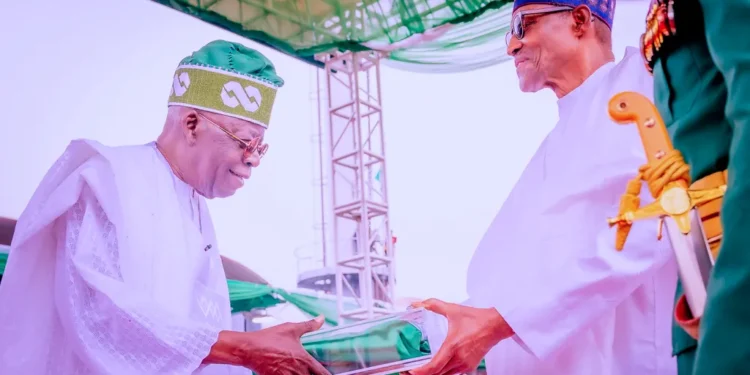
As Nigeria prepared for a historic transfer of power on 29 May 2023, security officials revealed that there was a covert plot by a group of serving and retired military officers to disrupt the handover from former president Muhammadu Buhari to his successor, Bola Tinubu.
The plan, officials say, involved the use of force, the seizure of strategic state assets and the possible assassination of senior political and military figures
The alleged conspiracy was uncovered only after months of intelligence gathering and a discreet joint operation by Nigeria’s armed forces and domestic security agencies. While early official statements sought to downplay the seriousness of the arrests that followed, the military later confirmed that officers had indeed been investigated for plotting to illegally overthrow the government.
Sources familiar with the investigation said the plot was masterminded by Alhassan Ma’aji, a serving army colonel with service number N/10668. Born on 1 March 1976, Ma’aji is a native of Niger State and a member of the Nupe ethnic group. He began his military training on 18 August 1995 and completed it on 16 September 2000.
Investigators allege that the original plan was to strike on inauguration day itself, when political leaders, senior military officers and foreign dignitaries would be gathered in Abuja. The objective, sources say, was to create confusion, neutralise key figures and prevent Buhari from formally handing over power to Tinubu.
However, officials briefed on the investigation said the plan was suspended at the last moment. The reasons, according to those accounts, included insufficient funding and weak logistical preparation, which made execution risky and uncertain.
The alleged plot then went quiet. For nearly two years, investigators believe, it remained dormant, with no immediate attempt to revive it. That changed in 2025, when intelligence agencies began to detect renewed activity and suspicious financial movements.
According to security sources, the plot was allegedly revived after fresh funding became available. Investigators believe the money came from Timipre Sylva, a former governor of Bayelsa State, who has been accused of bankrolling the operation.
61-year-old Sylva from Brass Local Government Area, is alleged to have transferred close to ₦1 billion in several instalments into three separate bank accounts operated by a Bureau De Change operator. The funds, investigators believe, were intended for the purchase of weapons, the recruitment of loyal officers and broader logistical support.
Sylva was later declared wanted by Nigeria’s Economic and Financial Crimes Commission (EFCC). Before that declaration, soldiers investigating the failed coup attempt raided his home. At the time, he confirmed the raid but denied any involvement in a coup plot.
Ma’aji, described by investigators as the central figure in the alleged conspiracy, is a senior infantry officer with a long service record. He was promoted to lieutenant colonel in 2013 and elevated to full colonel four years later. At the time of the alleged plot, he was serving as Commanding Officer of the 19 Battalion of the Nigerian Army in Okitipupa, Ondo State.
He previously participated in Operation Crocodile Smile II, a major military exercise launched in 2017 to address security challenges in the Niger Delta and parts of south-west Nigeria. He also served at the Nigerian Army Depot and later as Commander of Operation Delta Safe, a joint security operation in the oil-producing region.
Ma’aji is a graduate of the Nigerian Defence Academy and a member of the institution’s 47 Regular Course.
Investigators believe that he and other officers were involved in planning a violent takeover of government. Government sources earlier briefed on the investigation said several senior political figures were marked for assassination, including President Tinubu, Vice President Kashim Shettima, Senate President Godswill Akpabio and the Speaker of the House of Representatives, Tajudeen Abbas.
As the investigation widened, intelligence reports suggested that senior military leaders were also potential targets. These reportedly included Service Chiefs, the Commander of the Guards Brigade and other officers responsible for the security of the presidency.
According to those reports, some officers were assigned to seize control of key locations in Abuja. These included the Presidential Villa, Niger Barracks, the Armed Forces of Nigeria Complex and Nnamdi Azikiwe International Airport. Control of these sites would have given the plotters access to the seat of government, military command structures and Nigeria’s main international gateway.
