Stakeholders in Nigeria's film industry have highlighted that financial constraints, limited distribution, and inadequate infrastructure remain some o
Stakeholders in Nigeria’s film industry have highlighted that financial constraints, limited distribution, and inadequate infrastructure remain some of the biggest obstacles to the sector’s growth.
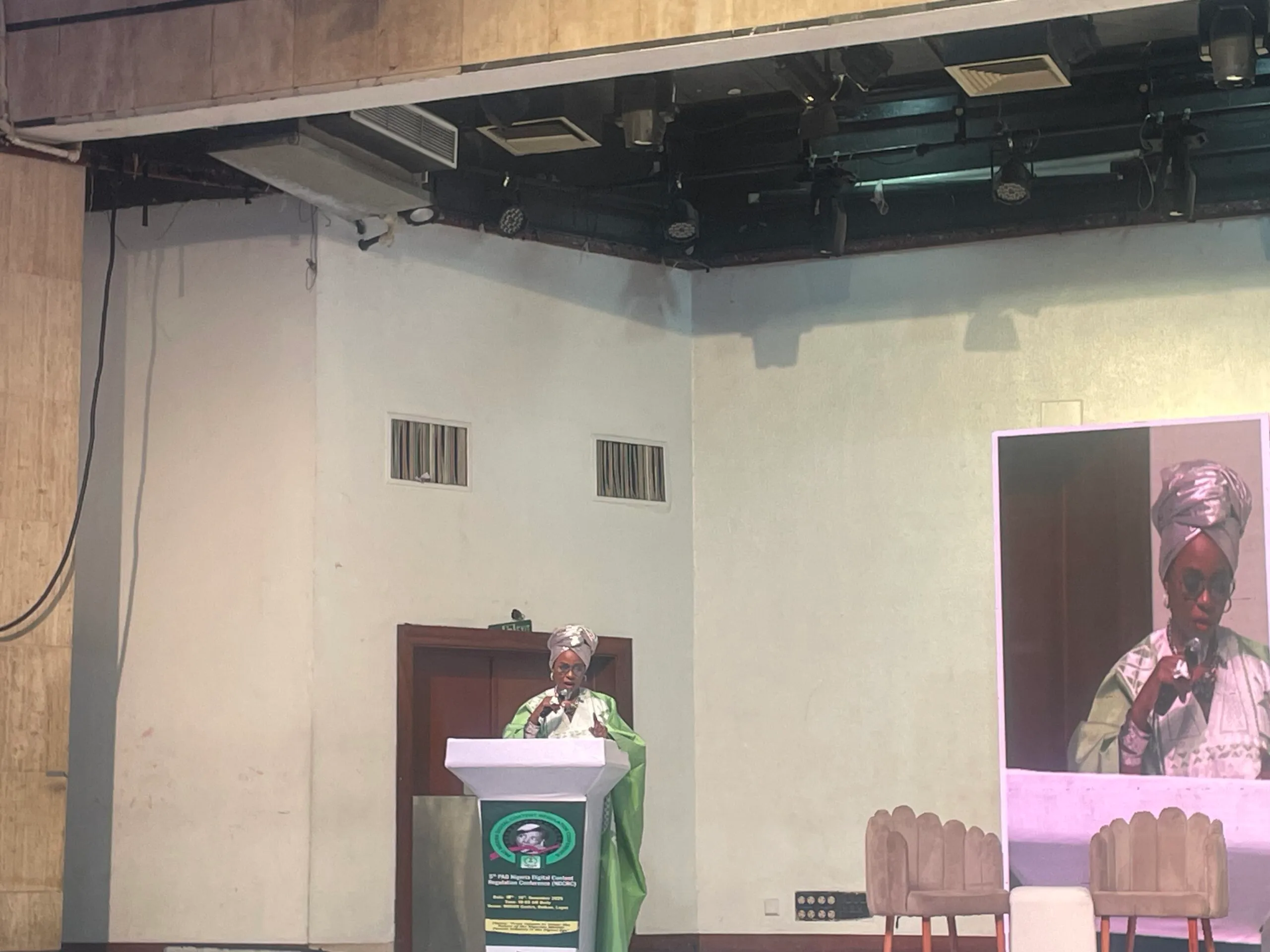
The stake holders made this known at the 5th Peace Anyiam-Osigwe Nigeria digital content regulation conference organised by the National Film and Video Censors Board (NFVCB), which held from November 18 to 19 at the Muson Centre’s Shell Hall in Lagos, with the theme From Volume to Value: The Future of the Nigerian Motion Picture Industry in the Digital Age.
The conference brought together producers, directors, actors, scriptwriters, and regulators to discuss strategies for enhancing the quality and global competitiveness of Nigerian cinema while also clamouring for a shift from high-volume production to more polished, internationally viable content.
The keynote speaker at the conference, filmmaker, Bolanle Austen-Peters while highlighting the economic pressures faced by producers, decried the high cost of producing films in Nigeria. Quality filmmaking often requires investment in international talent, state-of-the-art equipment, and technical expertise, which can significantly increase budgets.
“When we bring in cinematographers from South Africa, from Europe, from America, you know the amount of money it costs us. It is not the same as using a local one. So when we talk about spending a lot of money, quality and distribution become a problem as well.
“We do all these films, who is buying them off us?” she asked.
The cost factor forces many producers to work within strict financial limits, often compromising on aspects of production that could elevate a film to international standards.
Austen-Peters described this balancing act as a constant challenge, adding, “We have limited platforms. So again, we’re handicapped. So when we talk about equality, is quality going to become financially rewarding? No. So when I’m making some decisions, I’m asking myself, ‘Hey, Joe, listen, we can’t spend more than N300 million for a Nigerian film. We cannot spend more than N500 million, because if we do that, we’ll run into financial ruin.’”
Beyond production costs, the ability to distribute films effectively remains a persistent challenge. The growth of digital platforms has offered new opportunities, but piracy and unauthorised streaming continue to undermine profitability.
Austen-Peters who was honoured at the event for her significant contributions to Nollywood, further underscored the economic dilemma:
She emphasized that even when a film meets international standards, the limited avenues for monetization make it difficult for filmmakers to sustain large-scale, high-budget projects.
“Who is going to buy a film that I spent $2 million producing in Nigeria? Exactly,” she said, underlining the disconnect between ambition and economic reality.
While financial and structural barriers are significant, stakeholders also acknowledged the resilience and determination of Nigerian filmmakers.
Despite the challenges, Nollywood continues to produce content that captivates audiences both locally and globally.
Austen-Peters celebrated this spirit, noting, “It is not a lack of understanding of what quality is that is the problem in Nigeria. It is the absence of so many things that can make quality prevail in our environment… But your environment is hindering you. An environment where there is a lack of funding, a lack of adequate infrastructure, lack of capacity. So many things are hindering us, yet we keep pushing. We keep producing. We keep churning out content… In spite of the big boys leaving us, we say, ‘we are not giving up.’”
