The federal government is once again under scrutiny after awarding a $700 million contract to renovate Tin Can Island and Apapa ports in Lagos to ITB
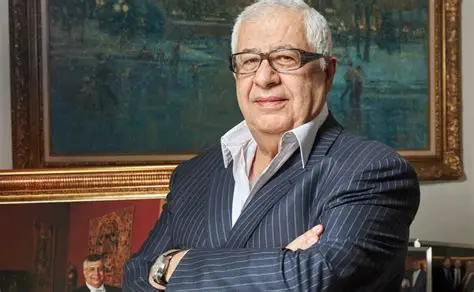
The federal government is once again under scrutiny after awarding a $700 million contract to renovate Tin Can Island and Apapa ports in Lagos to ITB Nigeria, a company owned by Gilbert Chagoury, a figure associated with financial crimes and political influence in Nigeria.
The massive contract was reportedly granted without a competitive bidding process, a direct violation of the Public Procurement Act of 2007, which mandates open and transparent bidding for high-value government contracts, particularly those involving international funding or exceeding ₦100 million.
So far, the Bureau of Public Procurement (BPP) has not released any waiver or legal justification for bypassing the competitive process. Likewise, the Ministry of Marine and Blue Economy, which oversees the project, has not explained how ITB Nigeria was selected.
The controversy deepens with recent labor issues at ITB Nigeria. In June 2025, over 150 workers were dismissed after staging a protest at a Lagos worksite. Reports confirmed that grievances included poor wages, lack of holiday pay, and discriminatory treatment by foreign supervisors. No investigations have been launched into the mass termination.
Tinubu’s longstanding ties with Gilbert Chagoury have drawn further attention. Chagoury previously returned tens of millions of dollars linked to the Sani Abacha money laundering scandal and paid fines in the U.S. for violating campaign finance laws. Despite this, he continues to thrive in Nigeria’s business and political circles through his conglomerate, the Chagoury Group.
Under President Bola Tinubu’s leadership, Chagoury-affiliated firms have secured two of the largest infrastructure contracts in Nigeria’s history: the $700 million port reconstruction and the ₦15 trillion Lagos-Calabar Coastal Highway project. Both deals were awarded without environmental assessments or public disclosure and lacked any transparent selection process — a pattern critics say reflects political favoritism.
Industry experts have raised alarms about the suitability of ITB Nigeria and HiTech Construction, noting their lack of experience in port infrastructure development. Many view this as either a major oversight or a deliberate act of patronage.
Awarding such a critical project to ITB Nigeria reinforces concerns about deepening cronyism and the dominance of oligarchs under Tinubu’s rule. His relationship with Chagoury dates back to his days as Lagos State governor in the early 2000s.
This goes beyond one contract or one businessman. It raises broader concerns about whether Nigerians still have control over their economy — or if it is increasingly in the hands of a few politically connected elites.
With inflation nearing 29%, youth unemployment over 40%, and national debt at historic levels, critics are questioning why multibillion-dollar contracts are being awarded to foreign-linked individuals with controversial records and no clear expertise.
Analysts warn that the growing relationship between the Tinubu government and Chagoury’s business empire poses risks to Nigeria’s democratic processes, fair procurement practices, and global reputation.
Tinubu entered office promising reform, transparency, and economic renewal. But mounting evidence suggests his administration is instead becoming synonymous with patronage, nepotism, and alliances with individuals previously convicted of financial misconduct.
With the 2027 general elections approaching, Nigerians are left to ask a more urgent question: not whether corruption exists — but whether the country’s institutions are still strong enough to stop it.
Culled From The Africa Report
