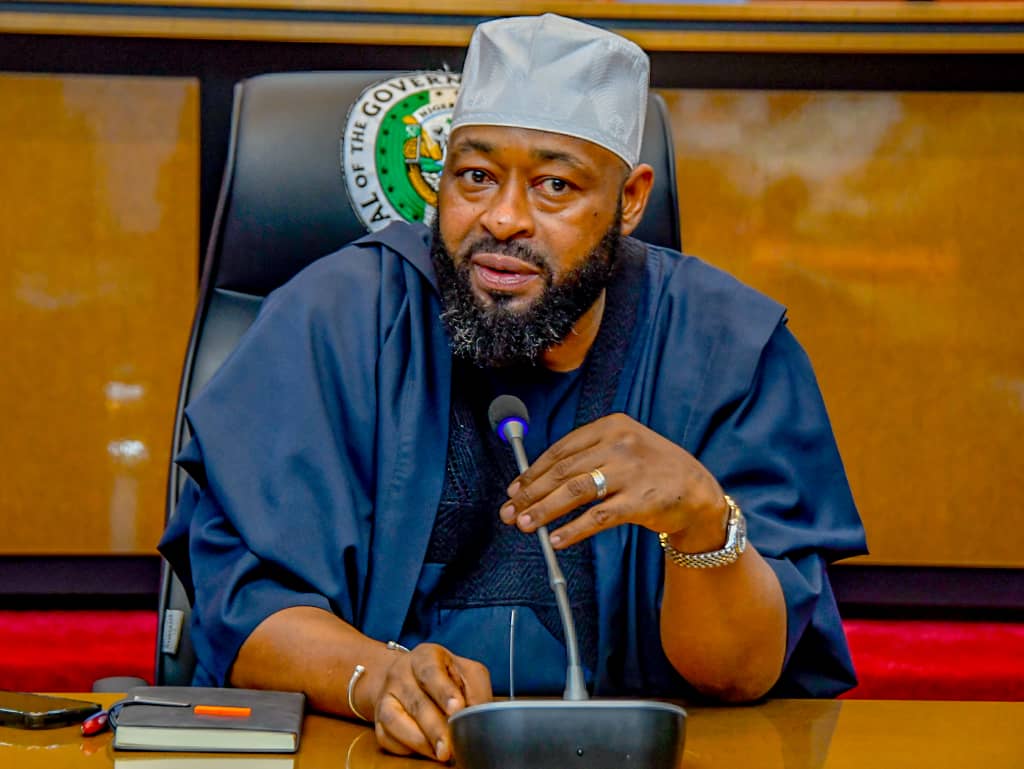
When Umar Bago, governor of Niger state, ordered the closure of Badeggi 90.1 FM on July 31, he triggered a wave of outrage
Civil society organisations (CSOs) and press unions described the move as a dangerous assault on press freedom.
Amnesty International said the development was unlawful, saying that only the National Broadcasting Commission (NBC) has the legal authority to sanction broadcast stations.
The human rights organisation said the decision of the governor represents an abuse of power.
“While bandits and insurgents are ravaging the Niger state through killings and massive displacements of rural communities, with both the Federal Government and Niger State failing to protect lives, pointing accusing fingers at a radio station clearly shows a failure of leadership,” Sanusi said.
“Attacking Badeggi 90.1 FM is part of a wider pattern of attempts to create climate of fear across newsrooms in Nigeria and to make it harder for journalists to do their job.
“Targeting independent media is solely aimed at depriving the people of the opportunity to receive fair and objective reporting of issues affecting their lives.”
The Nigerian Guild of Editors (NGE) also condemned Bago’s order, branding it a threat to democracy.
Citing section 39 of the 1999 Constitution and article 9 of the African Charter on Human and Peoples’ Rights, the guild said freedom of expression and press freedom are constitutionally protected rights in Nigeria.
“Arbitrary closure of media houses reminds us of the dark days of military rule, which ended 26 years ago,” the editors warned.
“The right thing to do is to write to the National Broadcasting Commission (NBC) for investigation. NBC has a schedule of our programmes and we are being monitored every day,” Shuaib said.
“So, the governor should write to NBC and let the regulatory agency verify our contents and programme to establish if they contravene any of the NBC codes or ethical provisions. We cannot do anything to undermine the public peace and security of the state. Our duty is to hold leaders accountable and that is what we are doing. We don’t have anything against any individual or state government.”
Muhammed Idris, minister of information, also weighed in, stressing that the suspension of broadcasting licences falls within the purview of the NBC.
The minister called for calm, while commending the Niger state government’s “decision” to formally report the “unethical behavior” of Badegi FM to the NBC for resolution.
Several civil society organisations and press freedom advocates have also lampooned the governor over the controversial directive.
This is, however, not the first contentious decision made by Bago since the advent of his tenure and especially in recent months.
The Badeggi FM saga is only the latest.
In April, the governor ordered the arrest of Minna residents with dreadlocks and directed that their hair be cut.
He claimed that the decision was part of a broader effort to curb crime and social vices, but the order sparked a backlash.
The Niger governor had insisted that his administration has zero tolerance for rascality.
“Anybody that you find with dreadlocks, arrest, barb the hair, and fine the person,” Bago said.
“Nobody should carry any kind of haircut inside Minna. I have given marching orders to security agencies.”
The governor would eventually reverse his decision following widespread criticism .
Bago later told investors that they were free to visit Niger with their dreadlocks, a remark that drew mixed reactions.
Bago claimed that he was misinterpreted, adding that his comments were specifically directed at those involved in cult activities within the state.
In July, a video surfaced showing the Niger governor telling security operatives to slap and deal with an Islamic cleric.
The incident unfolded at the Minna residence of the Niger deputy governor during prayers for his late wife, Zainab Yakubu Garba.
“Are you a cleric?” the governor was heard asking the cleric.
“Slap him… I said slap him very well. Oya, go and arrest him. Deal with him thoroughly and bring him back,” Bago was heard telling security personnel.
The footage stirred outrage from religious leaders and civil rights groups, who accused Bago of trampling on free speech and humiliating faith leaders.
The Niger government later clarified that the governor’s words had been taken out of context, but the explanation did little to douse the uproar.
In June, Bago again came under fire when he granted unconditional state pardon to 11 convicted persons who were sentenced to death.
“The convicts were involved in a communal clash between Gaba and Amfani communities of Lavun LGA of the state, which led to the loss of lives and property,” Nasiru Mu’azu, the Niger attorney-general, said at a press briefing.
“The state pardon is in exercise of the constitutional powers of the governor following a written request which was further reviewed between the governor and the state advisory committee on the prerogative of mercy.
“He said the state pardon is also part of the reconciliatory efforts to ensure lasting peace between both communities, adding that several meetings have been held and all issues have been resolved.”
Unrest broke out in Gaba after the clemency for the offenders was revealed, as protesting youths accused the governor of paving the way for renewed killings and violence.
The move was condemned by victims’ families, lawyers and human rights advocates, who described it as reckless and a blow to justice in a state already struggling with insecurity.
Paul Gana, chairman of Gaba Development Association, said elders intervened to stop youths from retaliating after the release of the convicted killers of their kinsmen.
In a letter signed by Isah Baba, public relations officer of the association, the governor was reminded that constitutional mercy powers should not be abused to weaken judicial authority.
The association condemned the pardon, saying it dishonoured victims, disrespected their families, undermined law enforcement efforts, and portrayed Bago as enabling injustice.
The group warned that the decision could embolden criminals, encourage extra-judicial reprisals, erode confidence in governance.
The group also demanded that the governor rescind the pardon to safeguard justice and public trust.
Earlier in February, the Niger governor appointed Jibrin Imam, a former state chairman of the All Progressives Congress (APC), as head of the Niger State Independent Electoral Commission (NSIEC).
Following the announcement, the Peoples Democratic Party (PDP) protested, saying all the NSIEC nominees were card-carrying members of the APC.
The opposition party said the action compromised the neutrality of the commission and erodes trust in the electoral process.
